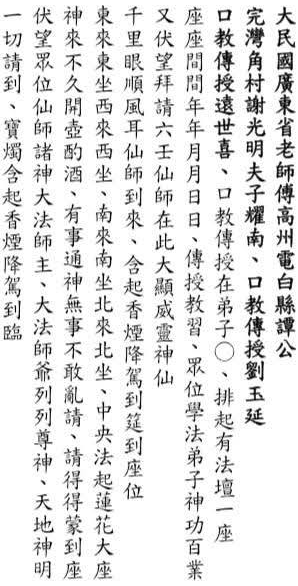
🏛️ The Fuying Hall Lineage (六壬伏英舘)
The Liuren Fuying Hall represents the most widely disseminated branch of the three original halls founded by Li Chunfeng's descendants. The name "Fuying" (伏英) means "Crouching Heroes" or "Hidden Excellence," reflecting the tradition's association with capable individuals who remained modest and protected the common people.
Classification within Southern Folk Magic Traditions:
Liuren Fa belongs to the "Hakka-lineage Da Xian Wei Ling Fa" (客家系大顯威靈法) - the Hakka transmission branch of the "Great Manifestation of Divine Power" folk magic traditions. This classification positions Liuren within the broader family of Southern Chinese esoteric practices that share:
- The invocational formula "大顯威靈" (Da Xian Wei Ling - Great Manifestation of Divine Power)
- Hakka cultural identity and language preservation
- Master-disciple transmission requiring formal initiation (過教)
- Practical protective magic serving common people
- Geographic transmission from Guangdong through Hakka diaspora to Southeast Asia (Nanyang)
See Related Traditions: Da Xian Wei Ling for detailed exploration of this shared spiritual philosophy across sister lineages.
在南方民间法术传统中的分类:
六壬法屬於「客家系大顯威靈法」 - "大显威灵"民间法术传统的客家传承分支。这一分类将六壬定位于南方中国秘传修持大家族中,共享以下特征:
- 召请口诀"大顯威靈"
- 客家文化认同与语言保存
- 需要正式过教仪式的师徒传承
- 服务百姓的实用护身法术
- 从广东经客家散居至东南亚(南洋)的地理传播路径
详见相关传统:大显威灵,深入探讨这一跨姊妹法脉的共同灵性哲学。
The Core Transmission Path
📚 Note on Historical Reconstruction
The following lineage represents a historical reconstruction from oral traditions, altar documents, and master testimonies. Liuren transmission occurred primarily through secretive master-disciple relationships in rural communities, leaving few written records. The masters listed below reflect the current consensus among Fuying Guan lineages based on corroboration across multiple sources, though specific details (dates, locations, alternate name spellings) may vary between branches.
These are not definitive historical facts but the best available understanding of how the tradition passed through time. Variations in spelling and naming (due to oral transmission, regional dialects, and hand-copied texts) are common and expected.
- Li Chunfeng's Third Son - Legendary founder of the Fuying Hall during the Tang Dynasty, emphasizing holistic balance of healing, secular protection, and spiritual evolution
- Jiazhi Old Monk / Tianzhi He (甲志老和尚 / 田志和) - Longhu Mountain (龙虎山), Jiangxi Province. This Buddhist monk is recorded in multiple altar genealogies as the direct teacher of Li Fahui. The variation in names (甲/田, 志/和) likely stems from handwritten text variants and dialect pronunciation differences. Current consensus treats these as referring to a single historical figure rather than separate individuals. Sometimes referenced as being from Shaolin Temple. This figure represents the merger between Liuren arts and broader Taoist-Buddhist liturgical traditions.
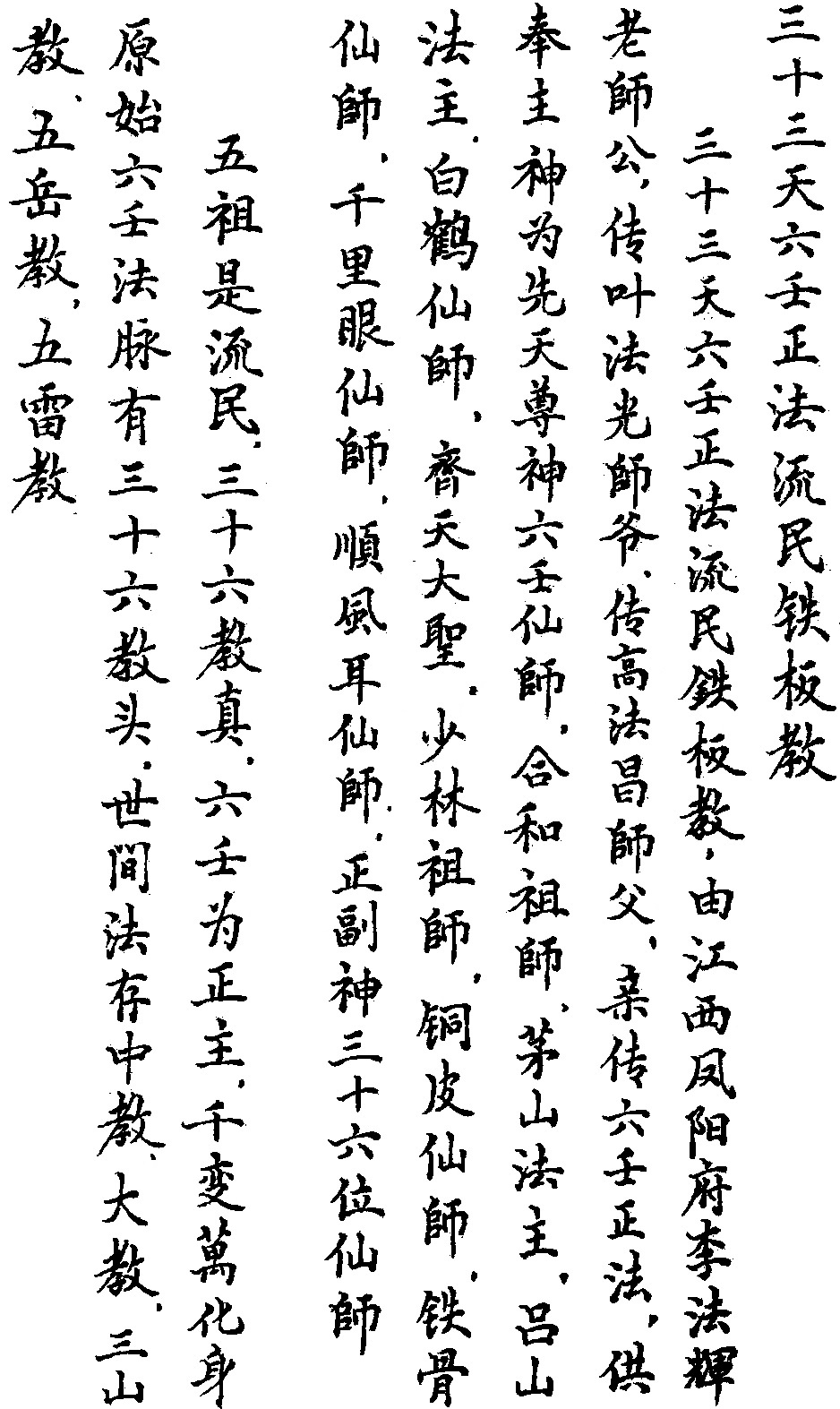
- Master Li Fahui (李法辉) - Fengyang Prefecture, Jiangxi Province (some sources say Anhui). Pivotal figure who systematized and refined the "Fa Ben" (法本, Dharma Manuals) that form the basis of contemporary practice. Direct disciple of Jiazhi/Tianzhi monk according to all mainstream lineage charts.
- Master Luo Faming (罗法明) - Migrated to Yaziду (Duck Crossing, 鸭仔渡), Huiyang County, Guangdong Province, specifically the Hakka heartlands
- Master Zeng Famiao (曾法妙) and Master Zeng Faping (曾法平) - The "二曾" (Two Zengs), based in Pingshan area. Their parallel transmissions created the distinct branch houses (房分) within Fuying Guan that continue today
- Master Liang Fachu (梁法初) & Master Liang Fayu (梁法余) - Facilitated 20th-century expansion into Hong Kong, working alongside the Zeng lineages
- Contemporary Masters including Situ Fazheng (司徒法正) and others - Instrumental in modernizing the presentation while maintaining traditional essence
📜 The Pingshan Transmission Path (坪山傳承)
Documented Lineage as Recorded in Altar Genealogies:
1. 龍虎山甲志老和尚(田志和老師公) #傳下
Jiazhi Old Monk (also Tianzhi He) from Longhu Mountain
⬇️ Transmitted down to
2. 江西鳳陽府李法辉祖師 #傳下
Patriarch Li Fahui from Fengyang Prefecture, Jiangxi Province
⬇️ Transmitted down to
3. 惠陽縣鸭仔渡羅法明老師公 #傳下
Master Luo Faming from Yaziду (Duck Crossing), Huiyang County
⬇️ Transmitted down to
4. 寶安縣坪山石灰坡曾法平老師公 #傳下
Master Zeng Faping from Shihuipo (Lime Slope), Pingshan, Bao'an County
This lineage chart appears in contemporary altar documents, recruitment materials, and master testimonies across multiple Fuying Guan branches. The formula "甲志老和尚(田志和老師公)→ 李法辉 → 罗法明 → 曾法平/曾法妙" represents the mainstream consensus on the transmission path from Longhu Mountain through the Hakka heartlands to modern Hong Kong and Southeast Asian lineages.
Textual Variants: Alternative spellings like "少林甲志和尚" (Shaolin Jiazhi Monk) or variations in 甲/田 and 志/和 appear across different sources. These are understood as textual variants from handwritten transmission and oral pronunciation differences, not references to separate historical figures. No current evidence supports splitting this into multiple distinct teachers before Li Fahui.
What Was Transmitted: Through these master-to-disciple lineages, the complete 六壬法科 (Liuren Ritual Procedures) were passed down, including the powerful methods of 驱邪制煞 (expelling evil spirits), 破邪解降 (breaking curses), and 禁止小人官非 (preventing malicious people and legal troubles). Each generation received not just knowledge, but spiritual authority (法力) to practice these arts effectively.
💡 The Hakka Connection
The migration pattern from Jiangxi through Guangdong to Hong Kong and beyond reflects the movement of the Hakka people (客家人). As the Hakka settled in new territories, they carried Liuren protections as spiritual insurance against the hardships of displacement. This made Liuren Fa Jiao particularly suited to the "Liu Min" (Vagabond) lifestyle.